
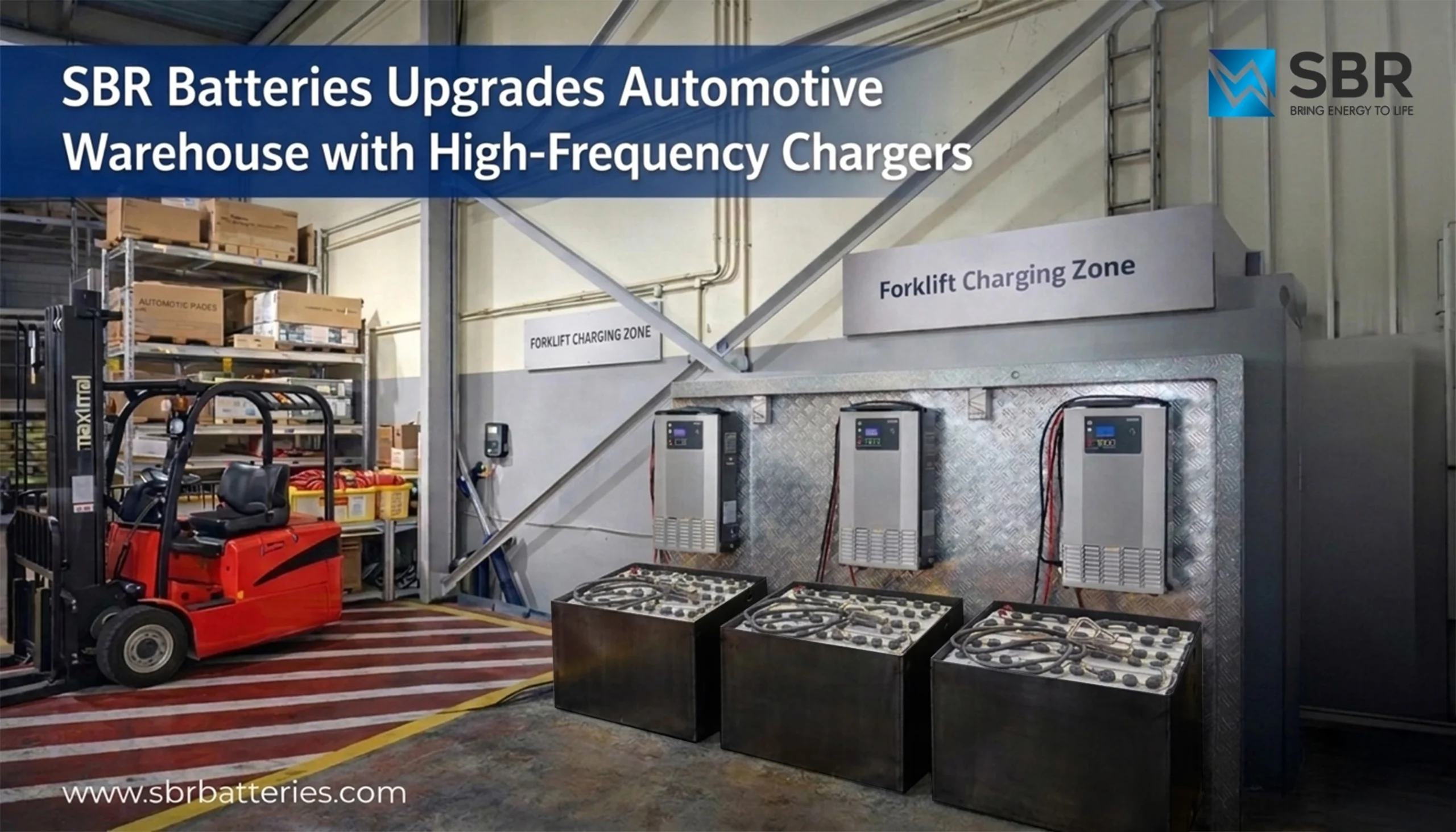
SBR Batteries Upgrades a Reputed Automotive Parts Distribution Warehouse with High-Frequency Chargers
Automotive part distribution warehouses play a crucial role in handling the different parts and components. That being said, forklifts and batteries are bound to run out of charge, given the operational demands of the logistics sector.
SBR Batteries have successfully upgraded the charging infrastructure of a reputed automotive parts distributor. We equipped their warehouses with high-frequency battery chargers designed for intensive material handling operations.
The Operational Challenge
This warehouse operates in a fast-paced distribution environment, where forklifts and other material handling equipment for extended hours. However, the existing charging setup faced a lot of challenges such as:
- Longer charging cycles that affect fleet availability
- Heat loss and higher energy consumption
- Increased maintenance requirements
The current setup made it difficult to handle the increasing demands. As these constraints grew, the facility was actively searching for a modern charging solution that would enhance productivity without compromising battery health.
The SBR Solution
SBR Batteries provided high-frequency battery chargers tailored for industrial forklift applications. The chargers were carefully selected ensuring compatibility with the machine taking into consideration the battery type and the operational load, with the future expansion in mind.
Key Highlights of the Solution
- Advanced high-frequency charging technology
- Optimized charging profiles for industrial batteries
- Compact design suitable for warehouse environments
- Reduced power loss and improved energy efficiency
The result? A future-ready charging system aligned with the warehouse’s operational demands.
Site Requirements (Customer’s Scope)
The following are the requirements that customers have to arrange as a part of the charger installation.
1. Charger AC Input Requirements
- For the 48V 100 A proposed charger model, a three-phase 16A socket with a 2.5 sq.mm cable is sufficient.
- If there is a plan to increase charger capacity in the future, installing a 32A three-phase socket with 4 sq.mm cable is recommended to ensure scalability doing away with the need for additional electrical modifications.
2. Charger Output Cable Management
Impact on Warehouse Operations
After the charger upgrade the following improvements were observed:
- Reduced charging time, increasing the forklift availability.
- Lower energy consumption leading to cost savings.
- Improved battery lifespan, minimizing replacement frequency.
- Enhanced safety with controlled and stable charging cycles.
This contributed to significant benefits such as smoother workflow, reduced downtime and increased productivity.
Why High-Frequency Charging Matters
High-frequency chargers have started to have a stronghold among automotive and industrial warehouses due to their efficiency, precision and adaptability. They offer numerous benefits such as:
- Faster and smarter charging
- Compatible with modern battery technologies
- Reduced heat generation
- Low total cost of ownership
Conclusion
SBR Batteries once again delivers a successful project by powering the automotive part distribution warehouse with high-frequency battery charging solutions.
Our expertise in delivering customized industrial battery and charger solutions tailored to the customer requirements. From consultation to charger selection to installation and technical support, SBR Batteries ensures high-operational efficiency.
